Vol. 16
On an enduring love for Japan by way of baseball, Midori, and "Tokyo Tokyo Old Meets New"

This is undeniably the summer of New York heroes: the Knicks, a mayor unafraid to swim in a suit, and voters unafraid of democratic socialism. Vibes are so immaculate right now, even a simmering heatwave feels somewhat bearable.
But if we were to leave this fair island, we’d be on the next flight to a different island—where ‘old meets new,’ where American trends get perfected practically beyond recognition, where hospitality is a tenant of everyday life, and where a fervent cultural exchange with the US has led to sushi at the baseball field and Midori at Smithereens.
This zine, we’re talking all things Japan. We even made up our very first Smithereens Travel Guide, featuring Chef Nick’s top Tokyo recs.
But first, Chef Junya Yamasaki of YESS fame is popping up at Smithees on Tuesday—don’t miss it.
—Smithereens
PSA: we are closed this Sunday, no lunch Smithee heads! Go have a BBQ, sling a couple hot dogs, soak up the city with those left behind. Happy 4th<3
YESS x Smithereens
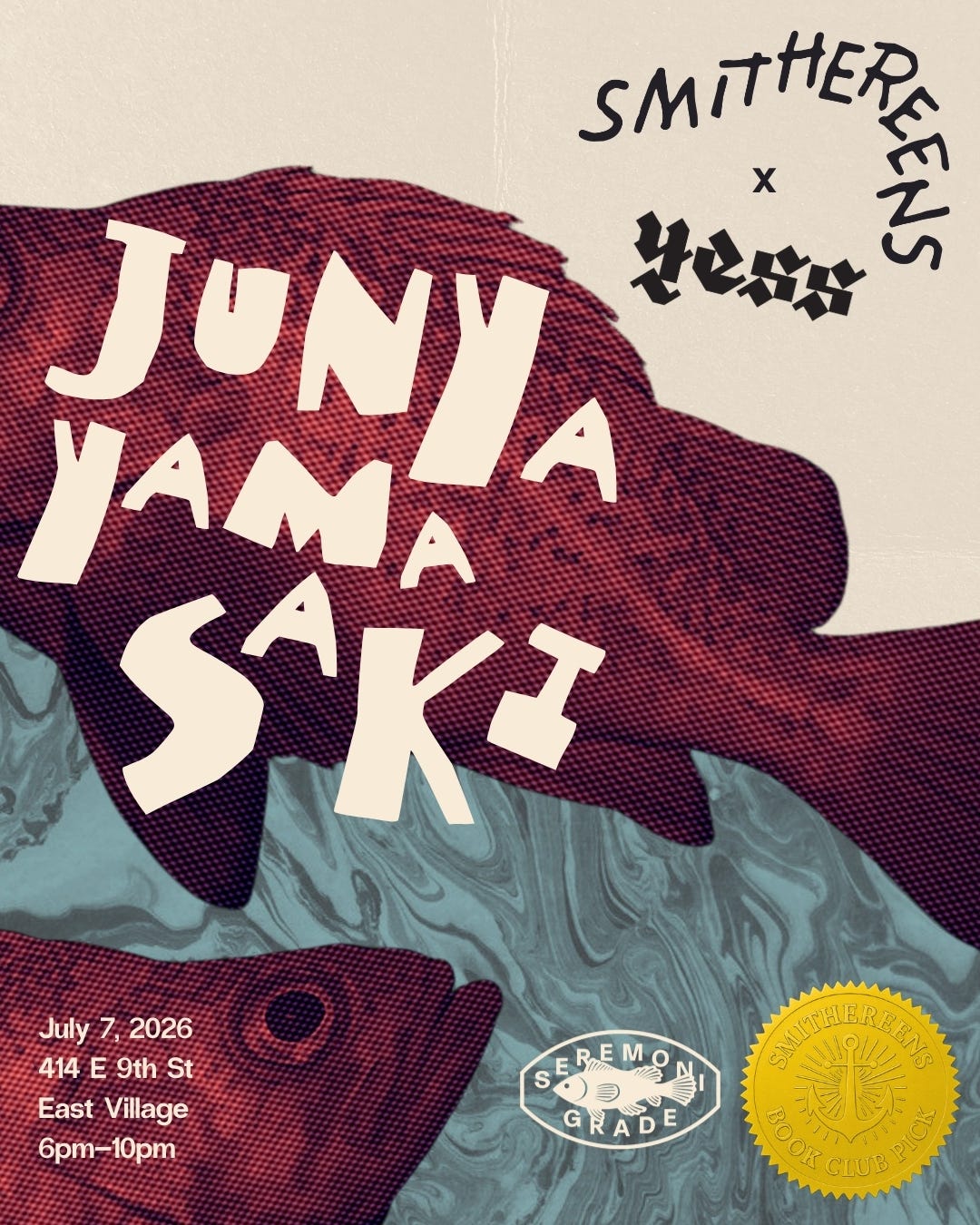
For our next edition of the Smithereens Book Club, we’re welcoming Chef Junya Yamasaki of YESS from Los Angeles for a one-night-only dinner on Tuesday, July 7th. Seremoni is on board too, a company that partners with legacy fishermen to humanely harvest wild-caught American fish. Expect à la carte dishes such as wild oysters with apple cider vinaigrette, confit black cod ‘pan con tomato,’ and sake steamed vermillion rockfish.
Q&A: Chef Junya Yamasaki answers the Smithereens Questionnaire
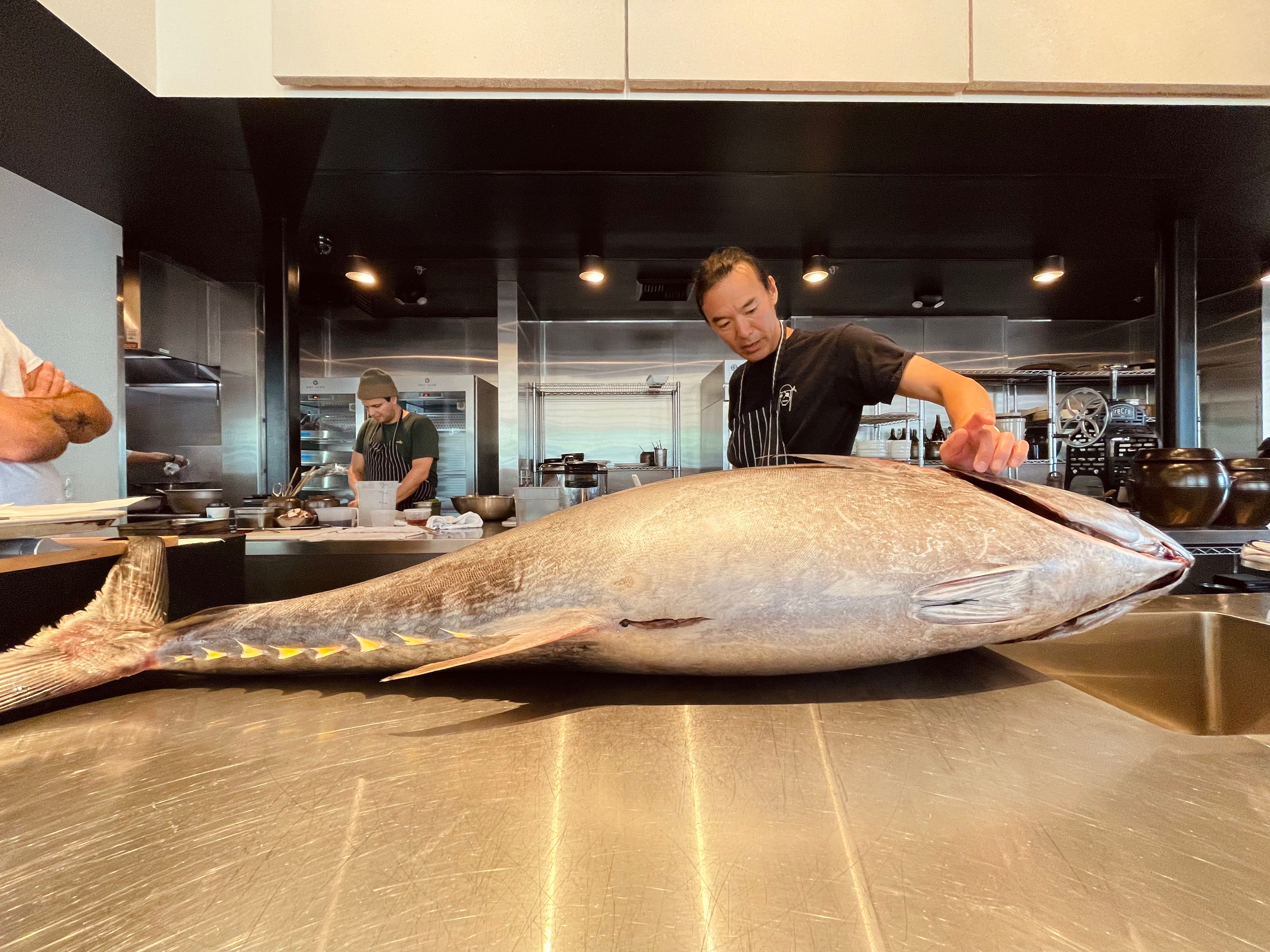
A renowned self-taught chef and fisherman celebrated for his distinctive take on Japanese cuisine, Chef Yamasaki is the head chef of YESS restaurant. Formerly a Zen apprentice at Antaiji Temple in Japan, and the founder and head chef of London’s acclaimed noodle bar Koya, he is also a mushroom forager and fisherman who first brought ike-jime and shinkei-jime fishing to California (see his epic headshot above). His cooking calls on traditional Japanese techniques, but brings in hyper-local ingredients and fresh, innovative flavors. While YESS is in between spaces in LA, we’re lucky enough to have him join us in NYC for the evening.
P.S. If you want a little BTS of how Yamasaki taught LA fishermen these Japanese methods for how to process their catch (and why), check out this great piece in Emily Wilson’s The Angel.
What is one thing you will always order if you see it on a menu?
Fresh Anchovy.
Where in the world would you most like to travel to at this moment?
Japan 2046.
It is your last meal on Earth, what are you having for dinner?
Plain rice and salt onigiri.
What is an ingredient that you can’t live without?
Love!
What music are you listening to in the kitchen?
Street Life by The Crusaders.
A Decade of Returning to Tokyo
—Nicholas Tamburo, Chef/Owner
We’ve just landed at Narita airport after a 14-hour flight from New York City and I feel horrible. I’ve had a pounding headache for the past 8 hours and after disembarking, I immediately get a sick feeling in my stomach. The human body isn’t meant to travel this far, this quickly.
When I go through customs and tell them that I’m traveling “for business” I feel like the coolest person in the world. I’m twenty-seven years old and have been a line cook for my entire adult life – the idea of “traveling for business” feels both incredibly alien and incredibly important.
It’s 2016 and it’s the “golden age of restaurants.” Suddenly, food has as much cultural capital as art, film, or literature. Every week a new, underdog chef is being discovered, or a new city named “the best food city in America.” The farm-to-table movement is newly reborn in places like Portland, OR and the Los Angeles food scene is said to rival New York City’s. Everyone is moving there. Fine dining isn’t yet a dirty word. The blog era is over and with the advent of Instagram, food has fully entered the mainstream.
I’m in Tokyo with Sean Gray to represent Momofuku Ko in The Grand Gelinaz Shuffle, a global culinary event sort of akin to performance art or the happenings of the 1960s. For one night, 40 chefs from around the world swap kitchens to create a menu inspired by their new surroundings. Back home in NYC, Gaggan Anand from Bangkok will be taking the reins at Momofuku Ko. Sean and I are in Tokyo to cook at Narisawa, a restaurant with two Michelin stars in Aoyama.
I buy an enormous water at the Lawson in the airport before we meet our driver who will drive us the 90 minutes it takes to get to Tokyo (and you thought Newark was bad). Thirty minutes into our trip I’m not feeling any better; fortunately I have the plastic bag from the convenience store to puke in. We finally arrive and check into a nondescript business hotel, quickly shower, and head out to have dinner at Florilège.
I’ve wanted to come to Japan since I was a child borrowing Miyazaki VHS tapes from the local library, and it feels incredible to be here—especially with Momofuku footing the bill.
You’re probably familiar with a lot of the stereotypes about Tokyo; it’s incredibly clean but there aren’t garbage cans anywhere; the convenience stores are amazing and nothing like the 7-Elevens in suburban America; it feels both chaotic and extremely orderly. All of this is true.
Tokyo feels like a vision of the future born out of the 1980s. Sleek and modern but sort of decrepit in a beautiful way. Maybe that’s because so much of it was built in the 80s during the “bubble era.” The country’s rebound following World War II was considered a miracle—yet the growth Japan saw in the 1980s was unprecedented.
In 1985, The G5 nations (The United States, Japan, France, West Germany, and the UK) signed “The Plaza Accord” aptly named for the Plaza Hotel, where they met to draw up the agreement. The Accord was meant to depreciate the U.S dollar against the Japanese yen and the German deutsche mark to help correct the U.S. trade deficit. To counteract the economic shocks of a more highly valued Yen in the exports market, the Bank of Japan slashed interest rates to an all time low of 2.5%. Credit was cheap and investment in the stock market and real estate was at an all time high. From 1985 to 1991, living was good. At its peak, the Japanese economy was the second largest in the world behind the United States. This also meant huge foreign investment from Japan into the US market; in 1989 the Sony Corporation purchased Columbia Pictures for $3.4 billion and by 1991 Mitsubishi owned 80% of Rockefeller Center.
The relationship between the US and Japan goes far beyond politics. Partially due to US occupation following World War II, Japan and the US have long had a robust economy of cultural exchange. Imitation is the sincerest form of flattery, so the saying goes, yet Japanese culture often doesn’t just settle for borrowing from us—often, their version is one significantly improved, honed and preserved with a singular reverence.
Jazz may have been born in New Orleans but it lives on in Tokyo. The concept of the modern convenience store, that symbol of American impatience, has been perfected. Traditional American clothing manufacturing—denim and loopwheel t-shirts—has become a beloved fixture of Japanese fashion.
I won’t go as far to say that Japan is anti-capitalist because that just wouldn’t be true, but it is remarkable that you will rarely see something done the easy way, the faster way, the cheaper way, at the expense of quality.
Imagine for a moment, a cocktail bar. You enter a small room, the sounds of jazz softly emanate from the stereo alongside the rhythm of ice jostling in a cobbler shaker. The smell of smoke hangs in the air—you notice one other patron down the end of the bar drinking an Old Fashioned and smoking a cigarette. You take a seat and the bartender approaches you wearing a handsome white sport coat, he offers you a menu. All the classics are here: the Manhattan, the Cosmopolitan, even a Brandy Alexander. You order a Negroni and your friend decides on a Daiquiri. First, the bartender cuts the ice and chills both of the glasses, then he starts to build the drinks. He places each spirit in front of you on the bar to showcase his ingredients, as if to say, “these are for you.” He adds the gin, Campari, and vermouth to a mixing glass for the Negroni. Then he cuts and juices the limes for the Daiquiri. He doesn’t rush, he just does what needs to be done. He makes each drink, one by one, with intention and reverence. Good things take time. This isn’t New York City in the 1920s, this is now Tokyo in 2026; this is the cocktail bar—perfected.
Sean and I head in for our first day of prep at Narisawa. We decide to get an early start and arrive at 8 AM; we’re surprised to find most of the cooks already in the kitchen working. There are a lot of ingredients that are entirely new for me: enormous winter melon, aromatic manganji peppers, and fatty, rosy seabass (akamutsu). The fish delivery arrives and the driver dumps a tub full of live softshell turtles into the three-bay sink.
The day is underway and we are given a tiny corner to prep in. The restaurant still has to handle their usual lunch and dinner service for the next couple of days and everyone is working at full tilt. The chefs are butchering beautiful Ōmi beef and blanching pigeons with hot oil. The young apprentices are relegated to the back of the kitchen where they are responsible for the most menial prep tasks, like peeling an endless amount of burdock root and washing dishes. The only way to get downstairs to the storage area is via a small elevator. As the deadline for service approaches, cooks frantically pound on the down button to retrieve what they need from the basement. When it’s time to scrub down to get ready for lunch service, we notice there’s no mop in sight, instead the apprentices are on their hands and knees cleaning and drying the floor with kitchen towels.
After service comes to a close, the team breaks for staff meal. They put up some amazing looking karaage, rice, salad, and miso soup. They invite Sean and I to sit and proceed to serve us a three-course lunch including dessert (with beverage pairings!) that they seemingly composed on the fly. The matcha ice cream that we saw the pastry chef spinning earlier? That was just for staff meal, just for us. It’s amazing but way too generous. “You don’t have to do all this, this is crazy,” we reassure them. “We’re totally happy to eat whatever you guys are having for staff meal, it looks great!”
“Please,” the maître’d said. “We insist. You are our guests.”
Japanese hospitality at its finest.
Omotenashi is the philosophy of hospitality and service. The warm oshibori you receive once you’re seated at a restaurant, the way the shopkeeper wraps your purchase as if it were a gift, the workers at the train station bowing and waving as the Shinkansen departs.
Omote means “public face,” an image of yourself that you present to the world. Nashi means “none.” Together it translates to honest and open hospitality. No hidden motives or agenda, just thoughtful and sincere service.
Omotenashi is grounded in mutual respect. Be on time, be respectful, be gracious. Don’t cancel your reservation merely hours before, don’t wear strong perfume that may overpower the aroma of the food, eat your food within moments of it being served.
The chef has been working the entire day to prepare this meal for you, hell, he’s been working his entire life for this moment. The least you could do is show up.
I haven’t traveled elsewhere in Asia but compared to other countries I’ve visited, Japan feels wholly unique. I envy the quiet, the order, the small rituals, the appreciation of beauty in day to day life. These days it seems as if everyone is going to Japan. It looms large in the collective consciousness of the Western world. In 2016, Japan welcomed 24 million international tourists. In 2026, that number is now over 41 million.
On that first trip to Japan I was just along for the ride. It being a work trip, I hadn’t researched or planned anything and I had no sense of the geography of Tokyo. This might be one of the best ways to first experience the city; some of the most interesting places and moments I’ve encountered were from just wandering blindly.
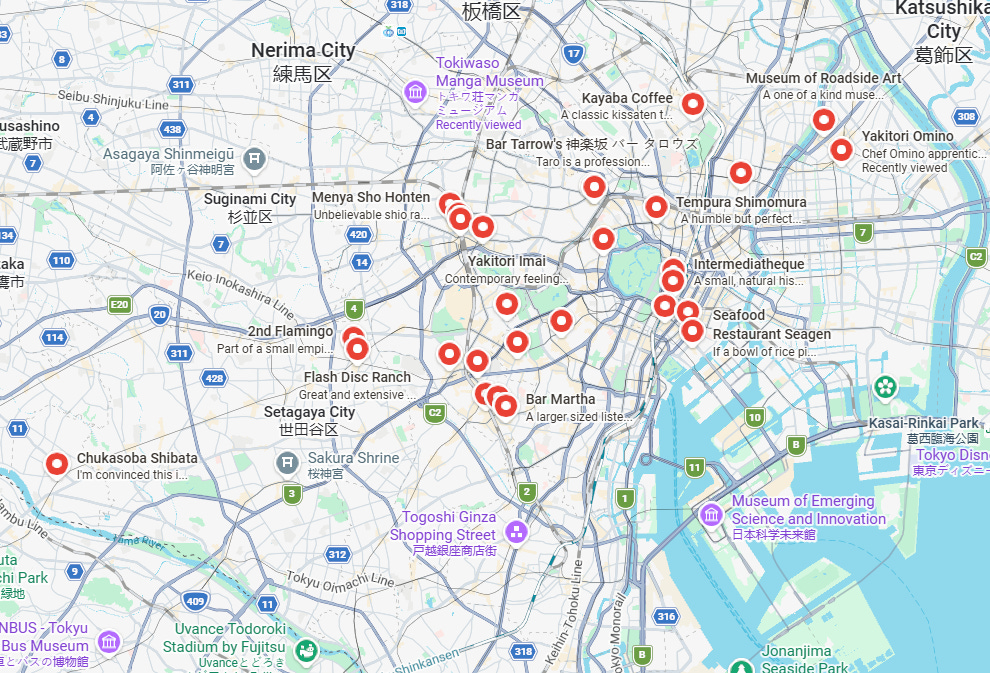
Fortunately, I was able to return in the winter of 2023 and again just a few weeks ago, in the beginning of June. Over the course of these three trips I’ve assembled a somewhat massive list of places to visit.
For our very first Smithereens Travel Guide, I’ve narrowed it down to just 28 spots, trying to steer clear of what you will see on lots of other guides. From best-in-class yakitori, tempura, and ramen, to hidden cocktail bars and cultural institutions and oddities, I hope this map will serve you well!
A Curveball at the Baseball Field
Nomo, Ichiro, Matsui, Ohtani, and the story of how sushi landed at the ballpark
—Hugo Goddard, Line Cook
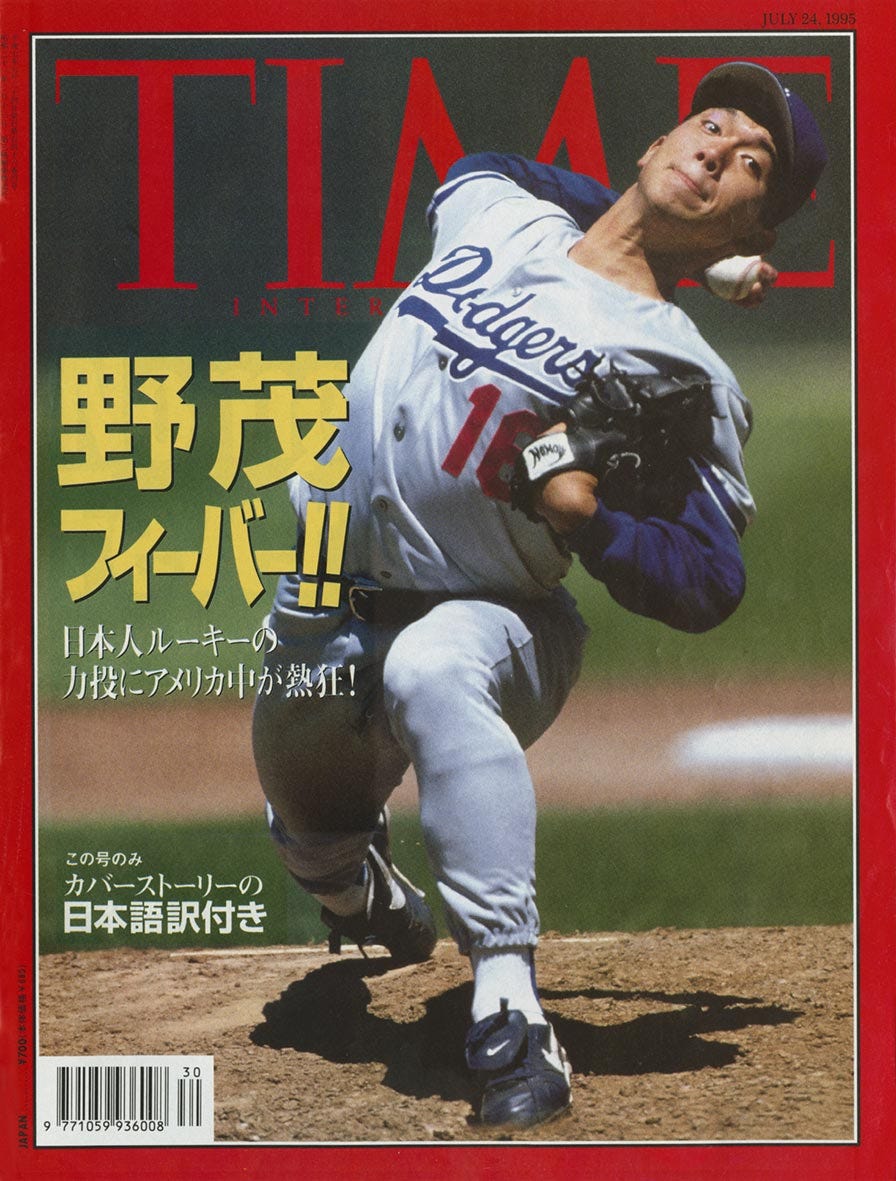
From Hideo Nomo to Shohei Ohtani, Japanese baseball stars have converted American baseball parks, slowly but surely, into Japanese food courts. Whether it be takoyaki at Dodger Stadium, gyoza at Yankee Stadium, Ichirolls at Safeco, or the 2026 debut of a tonkatsu curry hot dog in honor of Munetaka Murakami at Rate Field in Chicago, MLB teams have ventured further afield to cater to a larger public, innovating beyond peanuts and cracker jack.
The west coast and its teams were the first to welcome washoku (Japanese food) in 1989, when sushi debuted on the ball field with the San Diego Padres, and then in 1980 replaced an ice cream stand at Angel Stadium in Anaheim. The Los Angeles Times compared it to a “parked Nissan on the White House lawn” on opening night. These two articles from 1989 and 1990 speak for themselves when it comes to just how novel this really was, and just how … different a time.
We’re talking social significance. We’re talking moral outrage. We’re talking baseball.
Think about it. You’re sitting in the grandstand on a sweltering summer day. It’s the bottom of the ninth, a tense, scoreless pitcher’s duel on the field, and that empty, gnawing feeling rumbles up from the pit of your stomach. You turn to your buddy in the next seat and say, “Gee, you know what would really hit the spot at a time like this? An ice cold brew and a hunk of eel, that’s what.
Thankfully, the demands of voracious fans far outweighed the xenophobic grumblings of purists and since then, a flood of Japanese players brought a ‘tsunami’ of Japanese fans and food.
The second half of the 1990’s sparked even more interest in Japanese food at the ballpark when Hideo Nomo, the second Japanese player to play in the major leagues, joined the Dodgers in 1995. “Nomomania” highlighted the beginning of an even more fervent embrace between fans and players. The Dodgers added sushi bento boxes and chicken teriyaki bowls to the menu at food stands.
Later, Seattle was the place to be, thanks to Ichiro Suzuki. Nintendo, which owned the Seattle Mariners, brought Japanese MVP Ichiro to America in 2001. Today, Ichiro’s cultural impact is still felt among fans, as frenzied reddit users rank their favorite Japanese foods to find at T-Mobile Park, like the “Ichiroll” and teriyaki glazed wings, aka the “ Ichi-wings.” (According to Chef Jeremy Bryant, who used to cook for the players, Ichiro would have exactly seven chicken wings before every game.)
The east coast got in on the game when Hideki Matsui came to the city to join the Yankees in 2003. While the Yankees still serve gyoza, edamame, and sushi at the stadium, you can also buy Japanese curry named after Matsui in Times Square. Go! Go! Curry! is a chain founded by Hirokazu Miyamori, who, like Matsui, hails from Kanazawa, Japan, and is so deeply inspired by the player that the franchise bears his name; Matsui’s number, 55, is pronounced “Go Go” in Japanese. Go! Go! Curry! ran 55-cent discounts when Matsui hit a home run, and still serve “Home Run” and “Grand Slam” Curries.
More than seventy Japanese players have joined U.S. teams since Nomo’s first game for the Dodgers. None has had a bigger impact than Shohei Ohtani, aka “Shotime.” Ohtani signed with the Angels in 2018 and joined the Dodgers in 2023. They call Ohtani the modern day Babe Ruth. The Babe and Lou Gehrig brought the best of baseball to Japan in the 1930s; now, in a full circle moment, Ohtani brings tons of Japanese fans over to the US, sparking an even greater appetite for Japanese food in American ballparks—with more than ten MLB parks now serving washoku.
Every Ohtani outing is vigorously observed through TV ratings, but also through the presence of Japanese fans who wish to witness him in action. According to reports, around 80% of Japanese tourists that visit LA grab tickets to watch at least one game at Dodger Stadium (which was renamed Uniqlo Field this year). To cater to these fans, the Dodgers partnered with several Japanese food companies. Within Ohtani’s first year, Dodger stadium partnered with Tsukiji Gindaco, Japan’s #1 takoyaki chain, followed by “S Foods”, one of Japan’s biggest meat processing companies, to bring wagyu to the ballpark. Would that satisfy Mr. LAT of 1990, I wonder?.
30 years separate Hideo Nomo and Shohei Ohatani, and food has come a long way from that first sushi stand standing tall at Angel stadium. From California rolls to wagyu, and from a writer’s outcry to pieces in the Los Angeles Times, Infatuation, and Eater now waxing poetic about the takoyaki at Gindaco, bemoaning the absence of proper milk bread on Delicious Hospitality’s Chicken Katsu Club, and praising the “Ohtani Effect,” it’s safe to say Japanese food has made it to the major leagues.
Going Green
The case for a Midori Sour
—Jacob Dorman, Head Bartender
The Midori is not visible. I am at Sophie’s, on fifth street between avenues A and B in the East Village, where dive bars are a dime a dozen but very few have the character that Sophie’s still does. I used to frequent Library, on A and Houston, when I lived over here. Now, Library is filled with NYU students and rich children cosplaying as common people. Doc Holliday’s, the closest bar geographically to Smithereens, has lines on weekend nights full of (as a fellow bartender once referred to them) “Todds and Beckys.” Sophie’s has suffered from some of this incursion but it still remains a true haven for dedicated drinkers who just want a dim bar, relative peace and quiet, and slightly hostile service. And that’s why I was there on a cold night this past January—but really I was there because my friend wanted a Midori sour.
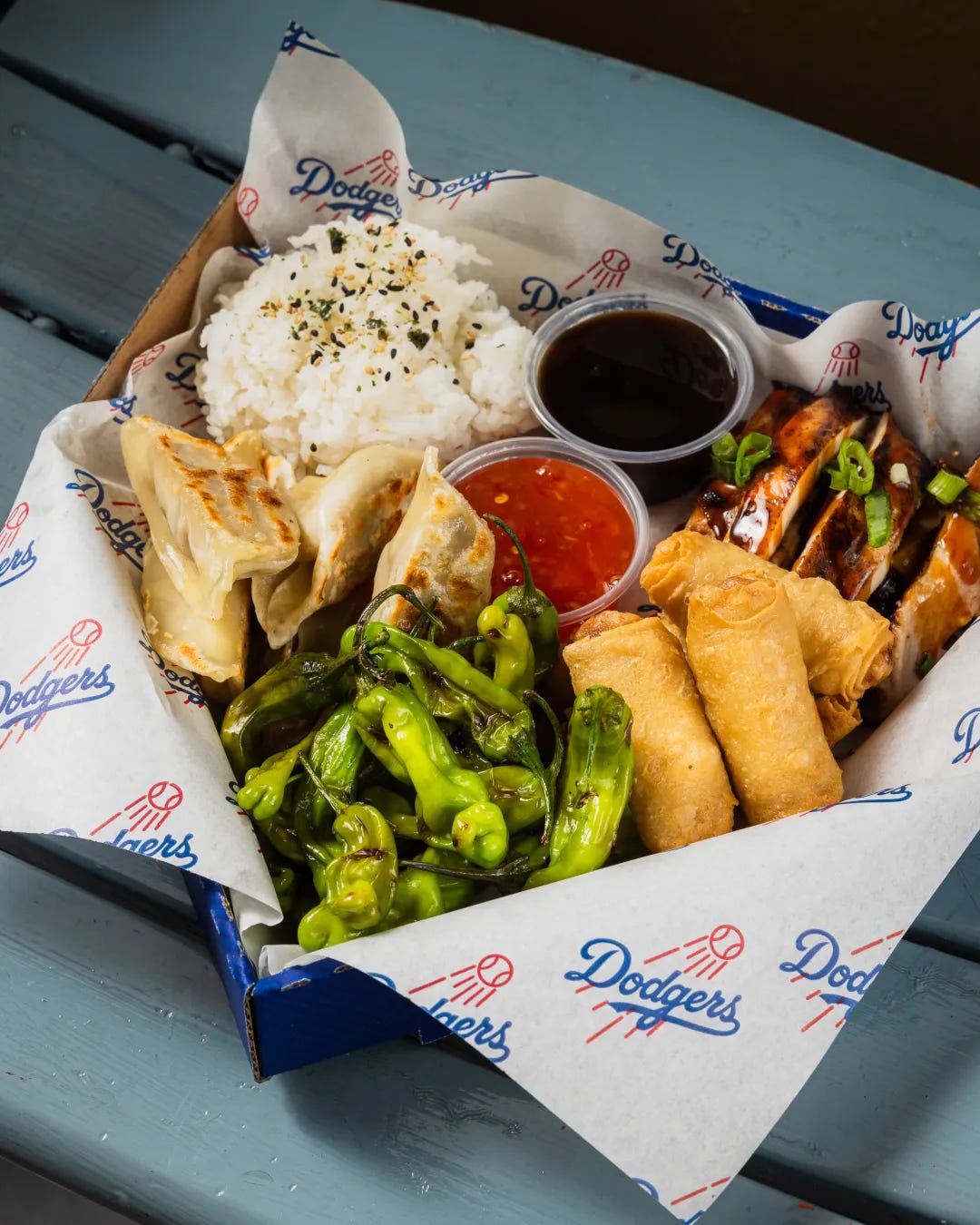
The Midori though, as I mentioned, is not visible. It is obscured by a white board with “Squares” on it: the game where you can gamble on the outcome of a football game, in this case the upcoming Super Bowl between the Seahawks and Patriots. “Just ask for it,” I say, “You know it’s back there.” But she won’t, so I must. The request is greeted with a chuckle in the key of “are you serious” but sure enough, the bartender reaches behind the whiteboard and there it is: the chemically green liqueur in the ergonomically curved, frosted glass bottle bearing an ‘M’ that looks like the signage for a strip club. I cannot comment on what exactly went into the rocks glass that we were served besides Midori, but whatever it was, it was not exactly the ingredients of a Midori Sour (we’ll get to that later). What did we expect at Sophie’s though? That’s what we deserve for ordering anything besides a shot and a beer.
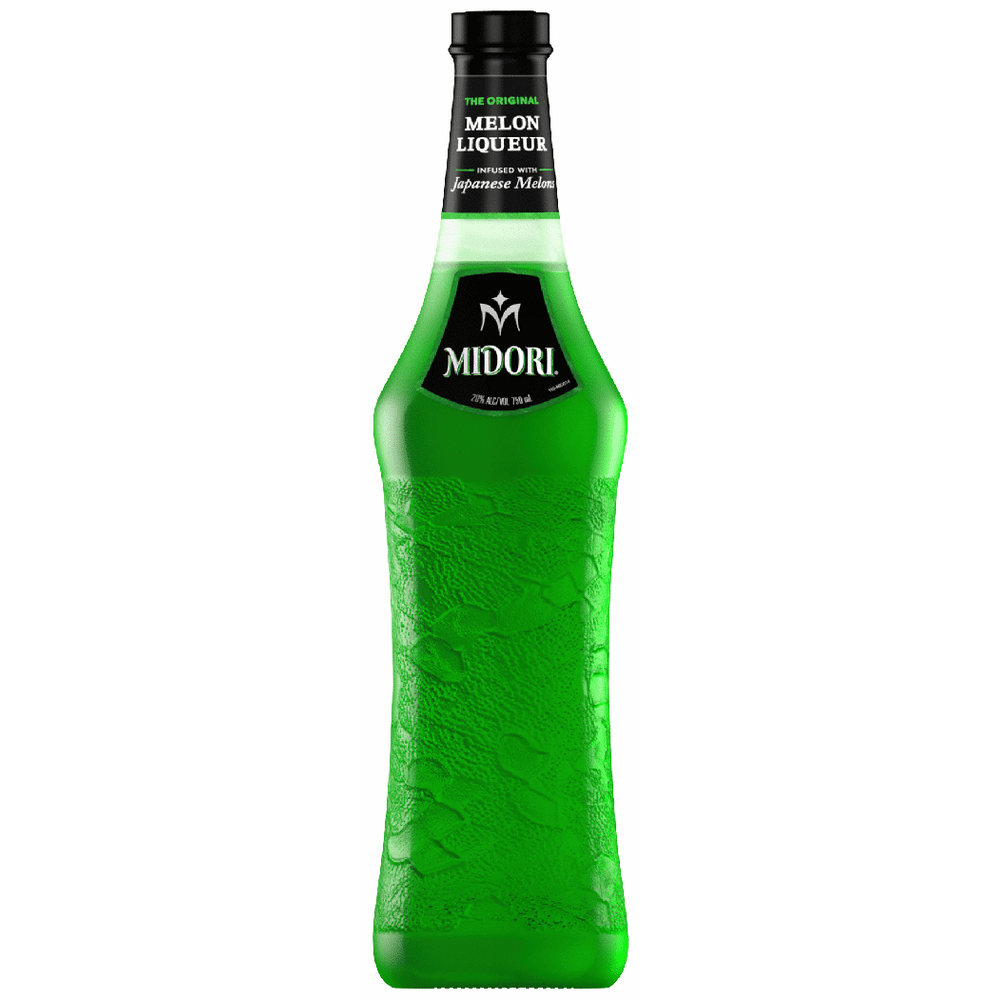
Of course this was not my first encounter with Midori (that was in college, when one of my friends took a bartending course and made us a bunch of ‘90s classics, like a Melon Ball, Rusty Nail, and Fuzzy Navel. Gross.), but it piqued my interest in the green liqueur. Perhaps it’s my love of the gauche and the camp but I love shitty drinks. This sounds like a slight but it isn’t; it’s time we reclaimed shitty. Narragansett, for example, is a shitty beer but it is also the best beer. We all struggle with how to express that to people who come into Smithereens and ask “what our lager is like.” Midori is mass produced, too sweet, and truly a color that does not exist in nature; it reminds me of the Futurama episode where Fry says “I just saw something incredibly cool! A big, floating ball that lit up with every color of the rainbow, plus some new ones that were so beautiful I fell to my knees and cried.”
Midori may not bring you to tears but you know what? It is delicious and that acid green is beautiful in its own right. Midori is made from Yubari King melons and muskmelons, neither of which are bright green so I’m not really sure why the liqueur is colored thus. Suntory started making it in 1964, under the name Hermes Melon Liqueur. It debuted in the states with its new name, which simply means “green,” in 1978 due to “strong interest from top US bartenders,” according to the unbiased Midori official website. Perhaps this is true though because that same year “The Universe” won first prize in the United States Bartender Guild’s annual cocktail competition. The Universe was invented by Bobby Batugo, and contains Midori, vodka, pineapple juice, lime juice, and pistachio liqueur (Brooklyn’s Sunken Harbor Club ran a cocktail inspired by this called “The Multiverse” but according to their current online menu it is no longer with them).
The history page on the Midori website then skips from 1978 to today, so I guess it’s been a quiet 48 years for the liqueur. It’s time to change that.
Here are a few recipes we’ve been having fun with at Smithereens; the first one you can find on our menu these days:
And last but not least, a Last Word.
乾杯 Kanpai!
Before You Go . . .
We are indeed a seafood shack in spirit, if not quite locale, and we’re happy as a clam to make the MICHELIN Guide’s list of the best shacks across the country.
Over at Food & Wine, we chatted about the origin story behind our pancake and the briny beauty of Neptune Oyster’s Johnnycake.
Ravenous asked us some questions about zine life!
Proof the martini is never out of Vogue; same for the good ol’ American road trip, à la Resy’s list of restaurants worthy of a special journey.
So take the trip over here, grab a lobster roll, a “shitty” beer, and a Midori sour to cap it all off in a Brat summer haze.