
Vol. 14
On California Dreamin'

There’s always been a kind of sibling rivalry drawn between NY and California. Pitted against one another in sports teams, in weather, in reigning art forms, in modes of transportation, and in counterculture scenes, they vie for the “best coast.”
If NYC and LA were on the NY Mag Approval Matrix, NYC clamors for “highbrow brilliant,” while LA teeters gleefully right in the bull’s eye, a shimmering mashup of “high/low/despicable/brilliant.” In Annie Hall, Woody Allen makes much out of this dichotomy, wailing: “I don't want to move to a city where the only cultural advantage is being able to make a right turn on a red light.”
California is that alluring amalgam of utopia and dystopia, of old and new, of natural beauty so vivid it appears unreal. We have to resist it because otherwise we might have to admit, well, it’s pretty great.
After the winter we’ve had, battered by snow that looked cute before it became menacing, when we got the invitation to head out west to pop up with a couple friends in Sonoma and LA, we accepted—giddy as a California grizzly coming out of hibernation.
This issue began as a tribute to California, and turned into a tribute to necessary rivalries: Old World vs. New World, Cal-Mex vs. Puebla York, ska vs. punk, and the beauty that arises from the tension in between.
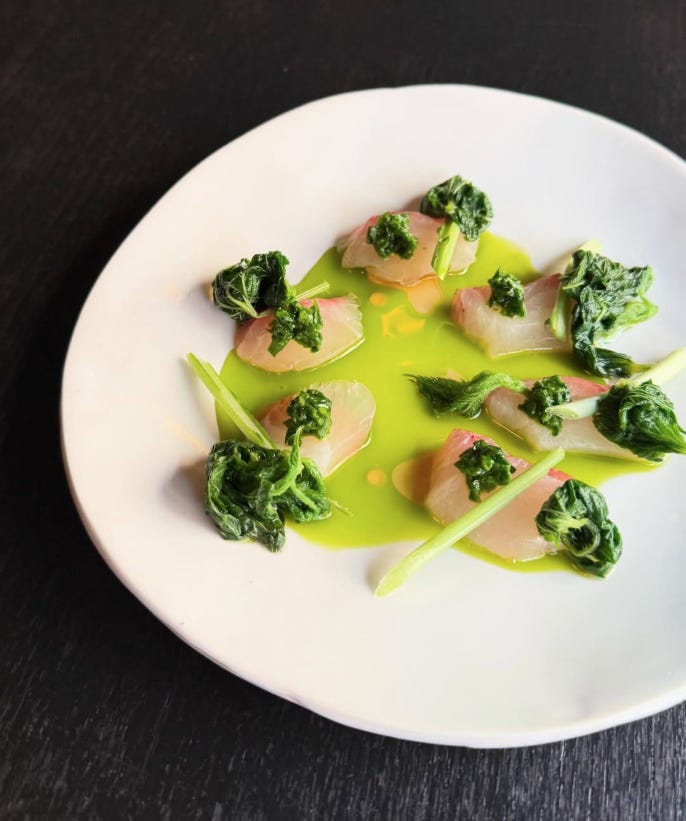
Come in soon! We’ve got some new dishes that scream of spring, like Jonah crab with peas, almond, and chartreuse, and this Shima Aji with roasted kale oil and stinging nettles. Fleeting stuff!
—Smithereens xx
Smithereens x Cali
Smithees pops up out west
—Nick Tamburo, Chef/Owner


Last month, some friends in California invited us to bring the Smithereens show on the road. Happy to escape the dull gray of February, I jumped at the opportunity. First we went North to Sonoma County to cook with the team at Troubadour Bread & Bistro in Healdsburg. Troubadour is the second concept from Melissa Yanc and Sean McGaughey, the couple behind the fantastic bakery, Quail & Condor. I first met Sean in 2020 during the heart of the pandemic. I had just moved to Napa Valley and found myself working at SingleThread, where Sean was the chef de cuisine. He had been there since the very beginning, and was on his way out to start up the bakery with Melissa.
Now at Troubadour, they bake bread and serve sandwiches during the day, then four nights a week they serve a French inflected tasting menu. I am incredibly envious of their collection of vintage Limoges and Bernardaud china.
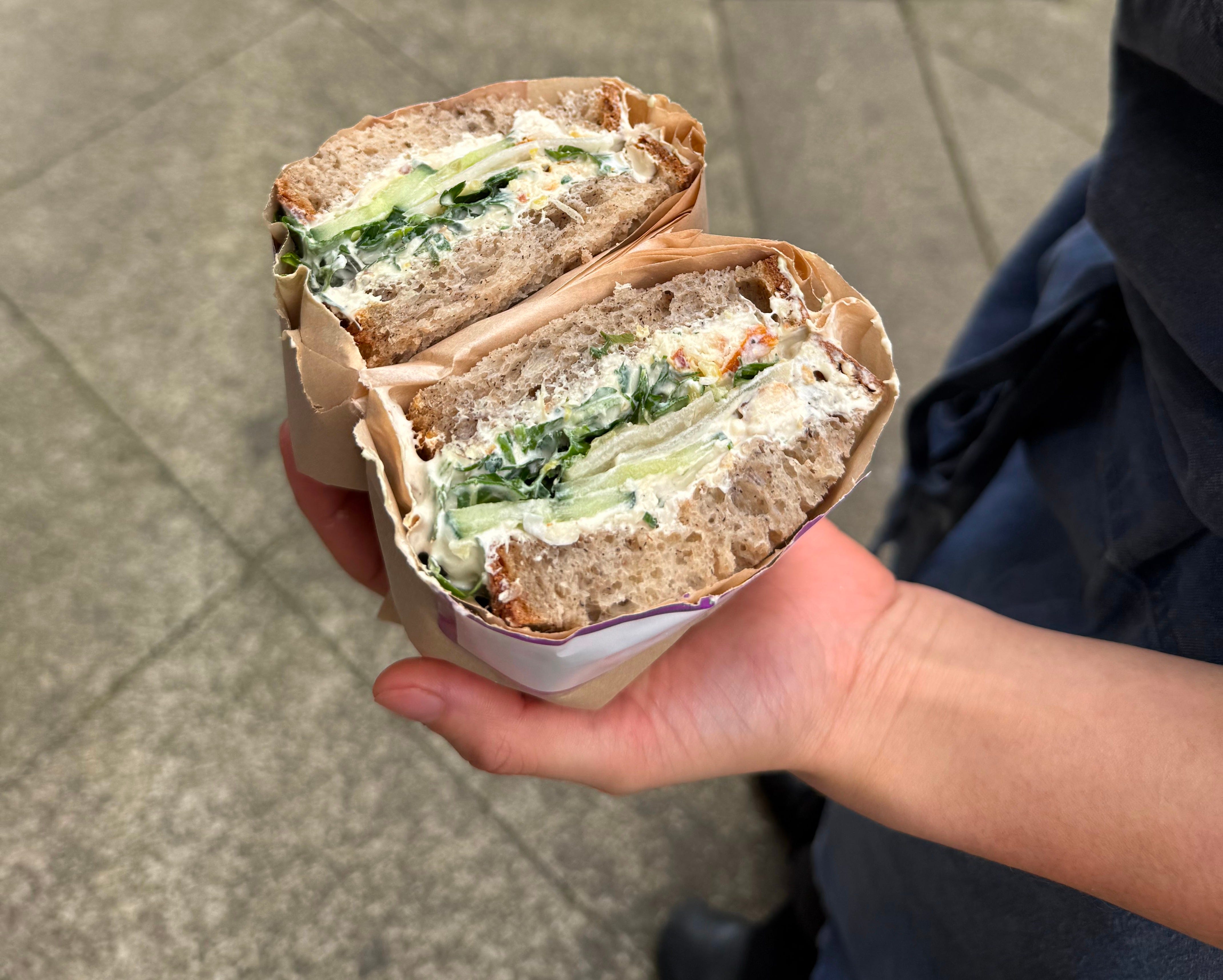
It was really nice to be back in Sonoma County and to cook with Sean and his team. We collaborated on a couple of dishes and brought along a few of our favorites from NYC. We took full advantage of some of California’s best ingredients and got to work with some Pacific smelts, sea urchin from Fort Bragg, and even turned our smoked bluefish pate into a sandwich for lunchtime. The Troubadour team baked a buckwheat sourdough especially for us!


Then it was on to LA to cook with Miles Thompson at his new restaurant Baby Bistro, which he runs with wine director/partner Andy Schwartz. I first met Miles through our mutual friend, Chase Sinzer (of Claud, Penny, and Stars). When I was still living in California, we all spent a weekend together in LA. Later, after we opened Claud, Miles came out to cook with us for our very first guest chef dinner. Miles has a super unique voice and a fanatical approach to sourcing that I really admire. (Even the garlic and limes that he bought for our dinner were the most beautiful I’ve ever seen.)
Smithereens and Baby Bistro feel like kindred spirits, we opened up around the same time and we are both small, weirdo restaurants. Once again, we were able to incorporate a lot of amazing local seafood into our menu, serving Dungeness crab rice and some beautiful vermilion rockfish.
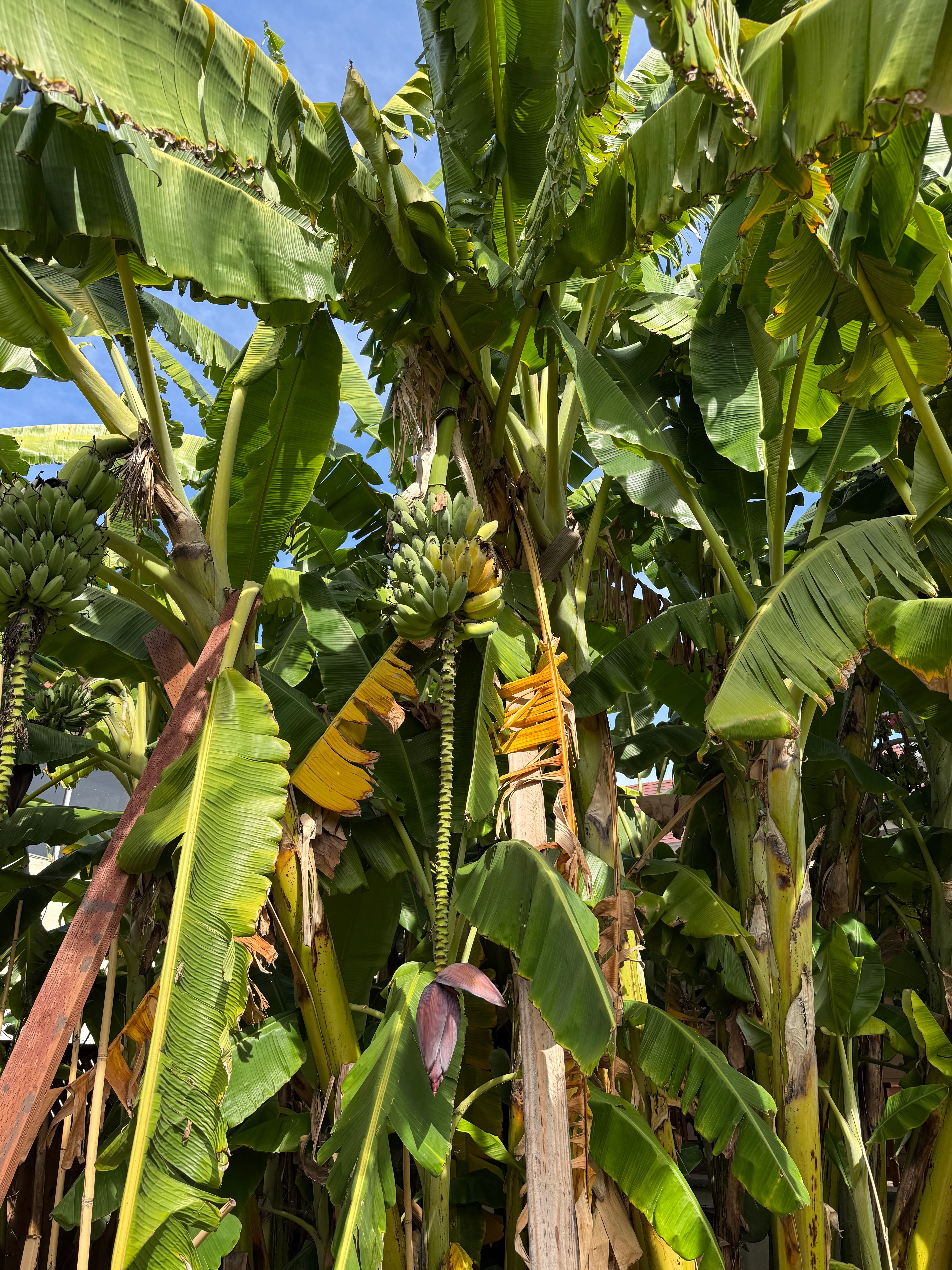
Baby Bistro is a really special place located in a tiny courtyard in Victor Heights. There are birds chirping, the afternoon light streams through the windows in just the right way, and there is a banana tree in the backyard. A far cry from our dingy, East Village basement back home.
We ate bananas from the tree and it was the single best banana I have ever tasted.
View from LA © Miles Thompson
Chef Miles Thompson, of Baby Bistro, recommends his top five spots in Los Angeles
Theodore Payne Nursery is an amazing resource for native plants throughout California, focusing specifically on the Southland. The nursery has many rare and endangered species looking for a new home. Located just north of Sun Valley, it is a bit outside of what most people consider Los Angeles, but is absolutely worth the trek. My wife and I have shopped at the nursery for years and she has outfitted our front yard with a stunning assortment of sages, buckwheats, mallows, and many more lovely native specimens.
Ed note: the Nursery has a wildflower ‘hotline’ that tracks wildflower blooms in the area, listen up:
A transportation to Japan, honestly. No gimmicks here, just an outstanding izakaya located in Arcadia in the San Gabriel Valley northeast of Downtown. Here you can find sashimi along with grilled, fried, and stewed items just as you would in a local Tokyo eatery. The fish is pristine; the owner was a Sushi Chef at a highly regarded sushi restaurant for many years before opening Tonchinkan and it shows. The group also has a yakitori and traditional Edo style sushi restaurant just up the road.
With over 120 acres of themed gardens (sixteen to be exact) in Pasadena, this park, if you can call it that, is a destination for anyone looking for a view into various worlds of natural beauty within the city. Beautiful at different times of the year for different reasons, it is truly a must-see when in Los Angeles, if only for its serenity.
Also technically outside of Los Angeles in Orange County, this sprawling market is a sight to behold. While part of a California supermarket chain, this location offers more than just groceries. They have a stunning array of Mexican products—both food and non-food items—as well as a butcher, fishmonger, bar, restaurants, and liquor store. The selection is huge, varied, and to me at least, extremely exciting. Mexican culture is such a huge part of Los Angeles and it is truly awesome to see it on full display here.
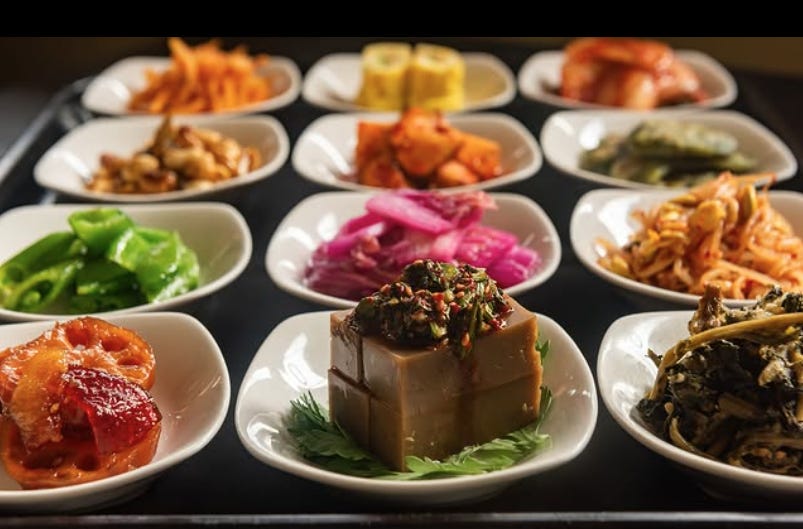
A long time favorite of mine. This Korean restaurant is a fantastic display of perfect cooking in my opinion. No frills, just all flavor and heart. The proprietors could not be any kinder or more generous. This restaurant has become quite famous for its ganjang gejang, or soy marinated raw crab, which is spectacular, but for me, it’s all about the banchan: small dishes of cooked and raw vegetables served at the start of the meal. Usually you are met with up to 18 selections, all gorgeous and, beyond that, delicious.
You Say Tomato, I Say Tomato
A dive into regional Mexican cooking in CA vs. NYC
—Nathan Zabala, server
If you, like myself, have made the move from California to New York and complained about the Mexican food, you know the look you get. After ten years in the city (and a few of those years accepting that Taqueria Ramirez really is worth the wait in line), I still bite my tongue whenever someone talks about a new place that just opened in north Brooklyn, or a truck that parks outside a their favorite bar. If you can relate, then before you concede the point entirely, it’s worth asking whether California and New York are even eating the same cuisine.
California’s Mexican cuisine is older than California is. Many Mexican families in California never crossed a border; the border crossed them, after the Mexican-American War redrew the map in 1848. What followed was over 150 years of evolving Baja and northern Mexican culinary tradition—flour tortillas, carne asada, fresh seafood, fish tacos—built on centuries of coastal cooking, all of it made with produce grown by the same Mexican farmworkers who cooked it. The Bracero Program (an executive order allowing Mexican men to work legally in the US on short-term labor contracts) brought millions of workers to the Southwest between 1942 and 1964, deepening those roots even further. Cali-Mex cuisine had generations to become itself.
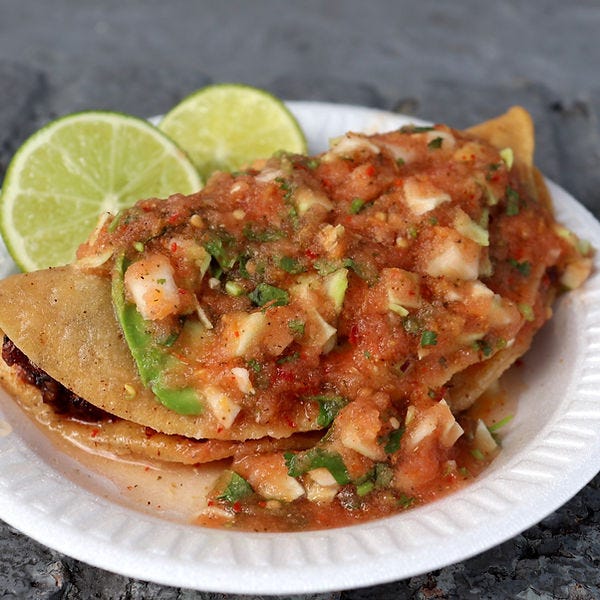
New York’s story is also compelling, but almost entirely different. Between 60 and 80 percent of New York City’s Mexican immigrant population comes from Puebla, a landlocked state in central Mexico with one of the most sophisticated culinary traditions in the country. It’s the birthplace of mole poblano, chiles en nogada, and tacos al pastor (which itself is a descendant of Lebanese shawarma, brought to Puebla by Lebanese immigrants). Most Poblanos (not just a pepper, but also the demonym for the people of Puebla) arrived in the 1980s and 90s, fleeing a few different historic economic crises and an earthquake, likely drawn to New York’s restaurant and construction industries. They brought that slow-cooked Pueblan culinary tradition and adapted it to a northeastern city with different produce and a completely different food economy.
So are California transplants full of shit? The short answer is yes, but not for the reason New Yorkers think. The complaint isn’t really that New York Mexican food is bad. It’s that it’s different, and nobody told us it would be. We showed up expecting the food of the borderlands and got the food of Puebla by way of Queens, which is its own remarkable thing entirely. Both are living cuisines, shaped by the specific people who built them and the specific places they landed.
The real answer for my fellow Californians is: order the mole, stop asking for a California burrito, and maybe just admit you miss home.
Ska: silly or sacred?
Revisiting the origins of Ska from the backseat
—Hannah Harrington, server and sommelier
Most of my fondest childhood memories happened in a car. It’s a SoCal thing, to be always in a car, always going, covering vast land under miles and miles of concrete.
Back then, you turned on any popular FM radio station, 91X or 94.9 or maybe 105.7, and you almost certainly heard that delicious 4/4 time register that announced, ok, ska has entered the chat.
The origins of ska in Cali are often argued over. In Randall Roberts’ piece for the LA Times, “Looking Back at SoCal’s First Ska Boom,” ska in California starts as a counterculture to the singer-songwriter folk music of the 1970s: “A case could be made that the ska music scene in Southern California was born in part because the longhaired dude behind the soundboard at the Whisky a Go Go on the Sunset Strip was playing too much classic rock.” Punk music already had a foothold in the SoCal music scene. Counterculture, and general antipathy for the mainstream, has always found a home here. Punk, however, has always had a white and often racist milieu. It didn’t match the real and vast racial diversity of the Golden State, or its tendency to be the poster child for some imagined post-racial utopia.
According to Roberts, “The original SoCal ska wave was triggered by the British ska craze of the late 1970s,” in turn triggered by a wave of West Indian immigrants who brought ska to London in the wake of WWII, as the UK opened its doors to rebuild its workforce. “Artists skanked their way and onto the charts by injecting punk energy into the music [scene]; L.A. outfits amped up that uniquely Jamaican rhythm with teen-driven energy.” By the 90s, though, police violence, particularly the Rodney King beating and subsequent state-wide protests, had escalated to a reckoning of what the California dream actually was.
Ska was a utopian, if reductive, answer to that.
It brought together the raw “fuck you” energy of punk with a distinctive racial theory: “ska was an integrated movement, a trait that remains a crucial distinction.” The Untouchables, often thought of as America’s first ska band, had a cast of rotating members of multiracial musicians. Laurence Fishburne was a “skankster” on the scene long before his turn as Morpheus. Despite a litany of racially charged violence across the state, live ska performances offered a short respite from the divided nation state outside theater doors.
Of course, there was a lot of irreverent silliness, too. The Aquabats, one of the few ska bands of the 1990s still touring today, had songs like “Idiot Box” with rhymes like “magoo” and “Scooby Doo.” They end many of their song titles in exclamation points.
Still, there are often questions of meaning in the world, like in the song “Shoot the Moon,” by Anaheim-based early ska group Voodoo Glow Skulls:
What is the real meaning of humanity
…
Let’s shoot the moon!
Soon you will be shopping
Without leaving your front fucking door
The cost of living is never going away
Jobs are fading and poverty is on the rise
As Evan Nicole Brown writes in Atlas Obscura, “most people tend to associate ska with upbeat, animated melodies, but the heaviness of reality found in many of the lyrics offered a somber contrast to the sweetness of the sound.” Provocation disguised in satirical play—there is an understanding of the common man’s oppression under a capitalist system, sure, but it’s so catchy we can hardly call it revolutionary.
By the time the mid-1990s rolled around, ska had found a place in, ironically, mainstream pop culture. No Doubt, an Anaheim-based band helmed by the young and energetic Gwen Stefani, spent uninterrupted weeks on the Billboard charts. “Just a Girl” remains a feminist anthem for millennials and newer generations alike. “Don’t Speak” has gotten me and many others through heartbreak. Heartbreak and girl power were hardly revolutionary tropes, though. There were no songs on “Tragic Kingdom” that could be read as plainly counterculture. Most of Stefani’s writing is deeply personal, which is an important departure from the broader social messaging of her predecessors. Had ska already lost its edge at this point?
Now, we see ska as a quasi-joke of the past, but there remains an enduring message: what lasts is not so much the cute front runner, or the money-making breakup anthem, but evidence of community, of a movement with an ideology that preaches egalitarianism over individual gain, of uplifting the everyman with California’s unique brand of breeziness.
“What I Got,” a Sublime song announcing some sort of sumptuous magnanimity toward the unfair world around us, is Buddhist in its philosophy. Sublime can hardly be called specifically ska, but it holds a lot of similar vibes to its strictly-ska predecessors.
It’s also ubiquitous. The beginning acoustic guitar riff gives me immediate flashbacks to beach hangs in high school, singing along (and laughing) about moms smoking pot, not having any money and that being ok, cuz “lovin’s what I got.”
Three decades after its release, the anthem still maintains a chokehold on radio dj’s all over southern California. There is something carefree in the utopian acceptance of whatever circumstances life may throw Bradley’s way. Among Sublime’s truncated oeuvre, though, it’s also one of the more innocent songs; sexual assault, domestic violence, and drug addiction are common themes. The front man, Bradley Nowell, died of a heroin overdose after their second album. When I happen to revisit any of their albums, I’m often thinking to myself, “why do I love this so much?”
Embarrassingly, my real introduction to ska sprung from an unlikely source: my mother. As a hippie turned born again Christian, she had a knack for discovering tunes that managed to be both worshipful and rather catchy. She was in the right place: southern California was one of the meccas for alternative-sounding Christian music. Bands like Switchfoot and P.O.D., both from San Diego, had the unique ability to tote gospel heavy lyrics while maintaining a sometimes secular fanbase.
One of my mother’s obsessions throughout the 90s was the O.C. Supertones, an eight-piece Christian brass band moonlighting as a ska outfit. You wouldn’t hear them on the radio, but we saw their shows in Orange County and had all their CDs. They proudly announced “we play the ska ‘cuz it makes you feel better / God’s got love for us and we got love for you!” They toured with other Jesus-lovin’ ska bands like Five Iron Frenzy in a 1998 event they called “Ska-Mania.” Eventually they performed for the Pope.
I think ska fits neatly in this milieu. Christianity, though muddled through decades of government co-opting and wealth hoarding, is textbook counterculture. It teaches that wealth is a path to corruption. It teaches love for your neighbor, even if they are different from you in every way. Blessings to the underdog, the poor and the unloved of society, run throughout the New Testament.
Religious or not, ska represented the possibility of mass radicalization, while making you feel good about it, worshipful even. It’s even possible, I think, that you could see Jesus at ska shows; that maybe he is the ultimate skankster.
Can you get down to that?
—-
p.s. Editor’s note: Guess who else was in a ska band? None other than yours truly, Nick Tamburo.
No Spitting
Old World vs. New World and a welcome reset
—Nikita Malhotra, Beverage Director/Partner
As snow blanketed the view from the 10th floor of my midtown apartment this past February, I knew rebooking my cancelled flight to Los Angeles would be a struggle. I started playing my Beach Boys “Pet Sounds” record, trying to find some inspiration for a workaround. I looked up train and bus schedules to cities where I might catch a flight, but the storm kept me imprisoned on the East Coast.
I never made it to LA, but I reached San Francisco after 3 days of being ensconced in snow and weather warnings. I flew out of JFK as a light snow began to coat the plane’s wings; the snow at this point feeling Sisyphus-like. Finally making it to the West Coast, I felt lighter. Having the warm sun and wafts of salty air from the Pacific Ocean cured my East Coast fatigue.
I was in San Francisco for La Paulée, a festival where 30 or so Burgundy wine producers are flown in and we get the chance to showcase their wine. The flagship festival is in New York, but Daniel Johnnes, the founder of La Paulée, has always had an affinity for San Francisco. The Bay Area represents the most tangible connection with longstanding wine culture. I felt this when I invited a couple of California winemakers to come hang out one of the nights we were in town. Bringing their wine and tasting it alongside French wine, I recognized how far we’ve come in how we think about Old World versus New World.
When I started my career as a sommelier, one of the main events I remember was an IPOB (In Pursuit of Balance) event. This organization, founded by Rajat Parr and Jasmine Hirsch, promoted the concept that California wine can have restraint, and dare we say balance. This group was founded when California wine was known for being big and bold, and the idea of Old World versus New World was universally accepted and embraced in the wine world. An organization like IPOB helped provoke the paradigm shift, and now we look for balance in all regions. California and other ‘New World’ regions are not unequivocally marked by features like opulence, ripeness, or—thinking specifically about Chardonnay—butter. The dichotomy between Old World and New World doesn’t quite make sense in a world where we now value terroir from micro-climates, and where certain ideas are more powerful than the borders that divide old from new.
At Smithereens, California is featured on the list with a sense of freshness and exploration; similar to how I felt when I finally got to California after that snow storm, the wines evoke innovation, lightness, and a connection to nature.
With all of this in mind, it seemed serendipitous that Patrick Cappiello reached out about hosting his event, the 1976 Judgement of Paris Redo. Patrick is now a well known California producer (Monte Rio Cellars), but he was once a New York sommelier, remembered for his love of Northern Rhone Syrah and sabering Champagne at his restaurant Pearl & Ash. He has become vocal about California wine these past few years, posing the question: why aren’t we drinking more of it? His commitment to celebrating the 50th anniversary of the original Judgement of Paris tasting follows his own journey of coming to appreciate California wine. It also offers a way to revisit the original event’s sentiment: we can’t assume a wine is better, just based on where it comes from.
The Judgement of Paris referenced here is not Homer’s tale of Paris choosing Aphrodite over Athena and Hera and sparking the Trojan War, but what a great story that is! Instead of Ancient Greece, we turn to a tasting organized in Paris in 1976 by Steven Spurrier, a British man who owned a wine shop in Paris, and his American colleague Patricia Gallagher. The tasting brought together some of the leading wine professionals from France, and was held in honor of America’s bicentennial. Wines from both California and France were served blind, and the results led to California wine being recognized on the world stage. The implications of this tasting were immense; the French had to face the fact that other regions had the means to make great wine. Napa cabernet beat Bordeaux and California chardonnay beat white Burgundy! For many in the wine world, this was a watershed moment.
A group of 12 judges, including André Hueston Mack, Victoria Taylor, and Joshua Nadel came together here at Smithees on March 24th for the final tasting of the 76 Redo, as we tasted four varietals, ten wines in all. American wine pulled ahead once again, with three out of four winners hailing from Oregon and California (Scar of the Sea Syrah, Flaneur Bon Vivant Chardonnay, and Las Jaras Chenin Blanc). Being judges from so many diverse yet discerning palates, we were surprised by some of the results—but that is always the case when you blind wine in a professional setting.
What didn’t surprise me? That today, wine made from all over the world is being produced in a way where the qualitative distinction between Old World and New World no longer applies.
In celebration of the “new,” Smithereens will also host three California producers for wine dinners this year. First up we have Tegan Passalacqua from Sandlands on April 22nd (stay tuned for tix). In moments when all the wine you taste throughout the years begins to feel saturated, Sandlands has always been memorable, representing a kind of California purity that is hard to put into words.
Later in the year we will have Brent Mayeaux from Stagiaire Wine, a project that the team is particularly invested in. A bottle of Stagiaire that Nick had at the East Village wine bar Horse With No Name spurred my interest, and Haran makes sure we are stocked with one of the cuvées at all times.
And last up will be Rajat Parr, an individual who has deeply influenced how I taste and appreciate wine. What he is doing at Phelan Farm is unique and influential to all winemakers, not just California. It was Parr who initiated my journey with California wine with his IPOB movement over a decade ago, and it shouldn’t surprise anyone that he continues to lead the narrative for the region.
California represents a reset, the promise of something new, and an escape from the grey and dreary that can settle on our New York streets.
Before You Go . . .
Eater NY’s Nadia Chaudhury recommends pairing our pancake (you know the one) with a martini - there’s a new fish sauce vesper on the menu, for maximum brininess.
Cake Zine’s Tanya Bush gave us a shout-out in The Angel; come in for ‘the best tartar sauce of your life’ (her words!) and don’t forget to pick up a copy of Tanya’s cookbook, Will This Make You Happy!
If you need more recs from Nikita (who doesn’t?) check out some of her recent faves at The Unicorn Review.
Smithees is a finalist for Star Wine List NYC (Best Medium Size list)!
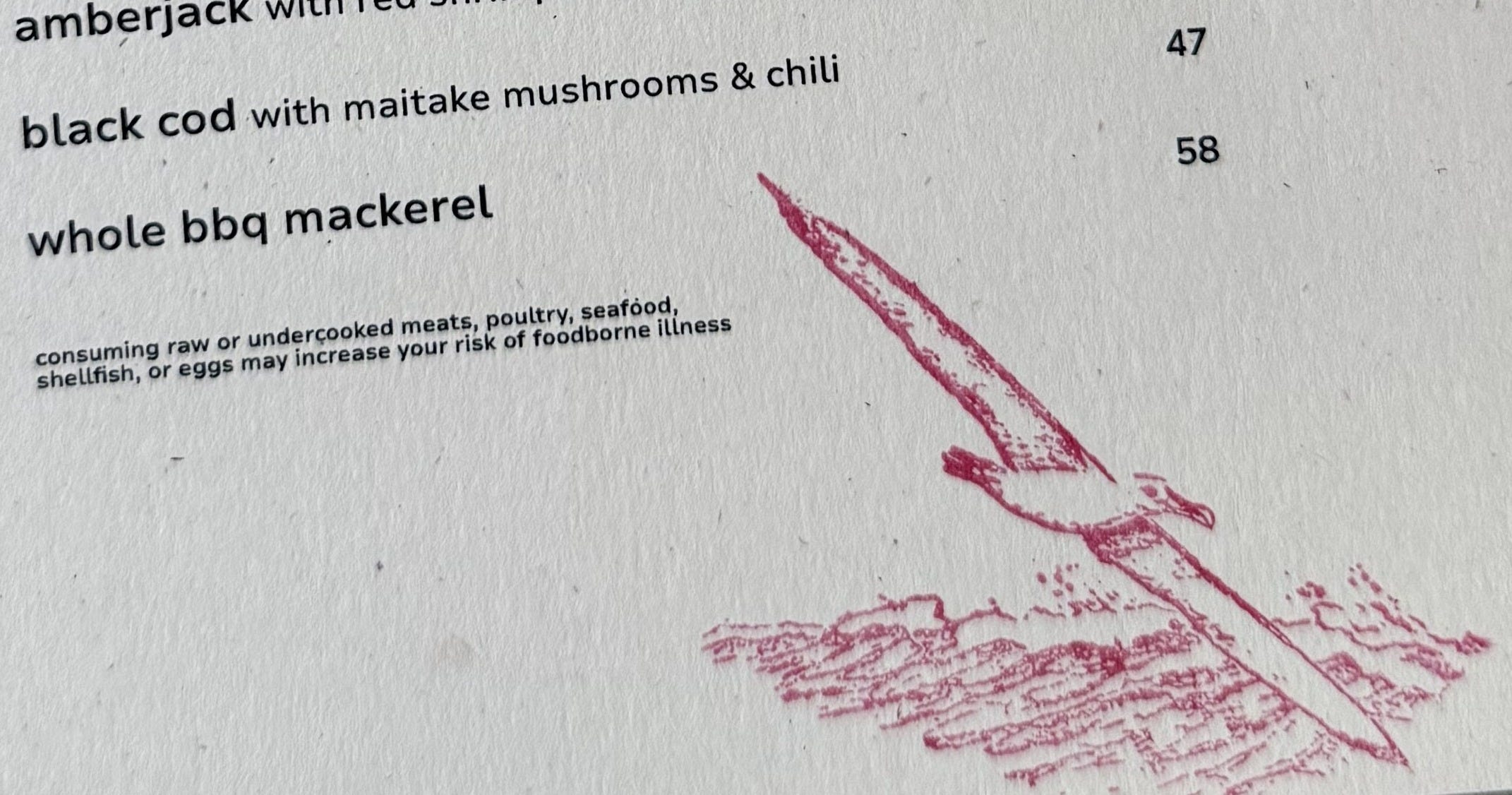
Over at Caper, Emma Orlow noted the use of stamps on our menus—all oceanic, all designed by the legendary John Casey of Casey’s Rubber Stamps here in the East Village. Highly recommend stopping by and grabbing a whimsical stamp to adorn a letter to a friend.
Savory pancake + mushroom martini sounds like my kind of brunch. Dreaming of that Shima Aji and occasionally California.
need to come back for that fish sauce martini!!!!